
How many portable toilets does a farm crew need?
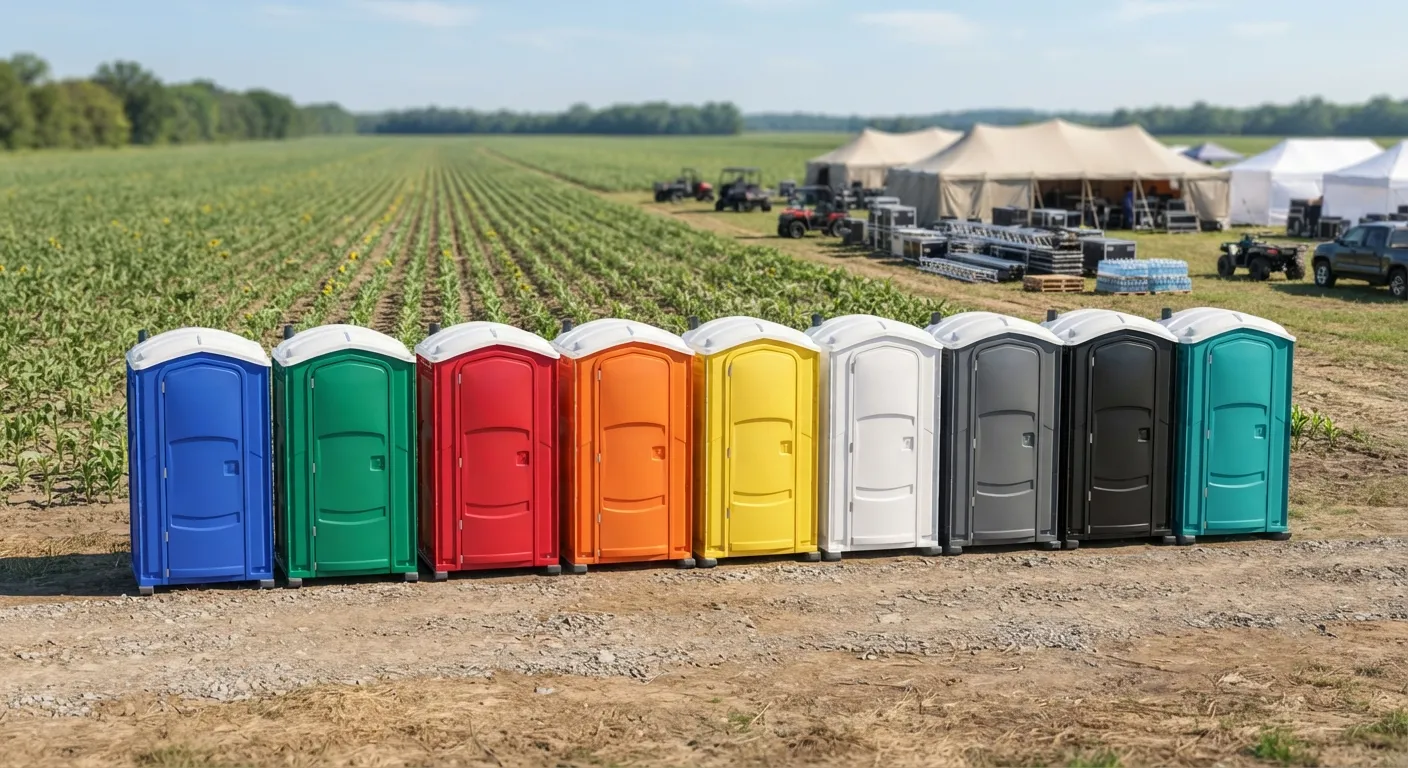
Start with headcount, not acreage. OSHA 1928.110 covers agricultural field sanitation directly: potable water, toilets and handwashing within a quarter mile of where hand-labor employees are working, at a ratio of one facility per 20 workers. A 15-person crew clears the bar with a single standard porta potty rental; a 45-person picking crew needs three units spread across the field, not clustered at one gate. If your operation runs closer to a general worksite than a field crew, OSHA 1926.51(c) applies instead, with its own tier of one toilet for 20 workers or fewer, stepping up as headcount grows. Either way, the fix is the same: more units, spread wider, not one big bank at the barn. Salem operations running multiple blocks often split units by field rather than by crew, so nobody walks a half mile mid-shift. For crews that move weekly with the harvest, a porta potty rental per day arrangement usually beats a fixed monthly setup, since the unit rides along on flatbed to wherever cutting starts next. Compare that against a monthly porta potty rental if your labor camp stays put for the season.
Do farm restrooms need handwashing stations too?
Yes. A toilet without a sink doesn't meet field sanitation rules, and 29 CFR 1910.141(d)(2) is specific: washing facilities need soap and towels or a hand-drying device, not just a bottle of sanitizer clipped to the door. Pair every cluster of toilets with a handwashing station rental or a portable sink rental placed at the same quarter-mile radius. If your crew handles pesticide-treated crops or does any spraying, OSHA 1926.51(f)(1) also comes into play. Washing facilities are required specifically where employees apply herbicides or insecticides, so a spray crew needs a wash station at the mixing site, separate from the general field units. This is where a lot of Salem operations get caught short: they buy one hand sanitizer station for the whole property and call it done. That doesn't satisfy 1910.141(d)(2), and it won't hold up in an inspection. A hand sanitizer station rental is fine as a supplement near equipment, but it isn't a substitute for soap and water at the toilet cluster. Check handwashing station requirements if you're staffing more than one crew across separate fields.
Where should we place units on farm ground?
Set units on level, stable ground, and rotate them as the harvest moves. A standard unit runs about 44 by 48 inches on the ground and stands roughly 92 inches tall, so it needs firm footing rather than loose furrow dirt that shifts under a full tank. If any worker on your crew has a mobility limitation, ADA Standards section 213.2 requires at least one accessible unit per cluster, even out in a field, and our ADA accessible porta potty option meets that spec with a 60 inch turning circle per ADA 304.3.1. Access roads matter too. Our trucks need about 60 feet of straight clearance to service a unit, so plan turnouts along the field road before harvest starts, not after a truck gets stuck between rows. Farms near Four Corners, 3.4 miles east of Salem, and Hayesville, 7.9 miles northeast, often run multiple pumping stops on the same route, which keeps service intervals tight during peak season. If your operation also runs a farmhand labor camp with a septic system, pumping frequency follows the same rule as any residential tank: every 3 to 5 years depending on tank size and household count, per our septic pumping service guidance. For standing water tanks feeding wash stations, our holding tank rental page covers capacity options.
For larger operations, farm markets, or U-pick events that draw public visitors, consider stepping up to a deluxe flushable porta potty near the sales area, and a full restroom trailer rental if you're hosting a fall festival on the property. County fair vendors and agricultural exhibitors can also check our county fair restrooms page for event-specific setups. Compare pricing structures on our porta potty rental cost page before committing to a season-long contract, and see the how many porta potties do I need guide for crew-size math beyond the examples above.
| unit | duration | typical price |
|---|---|---|
| standard | day | $150 |
| standard | week | $200 |
| standard | month | $200 |
| ada | week | $185 |
Farms operating equipment yards alongside fields sometimes need roll-off dumpster rental for harvest debris or temporary fence rental around a labor camp. Both pair naturally with a field sanitation order since delivery trucks are already routed to the property. Salem Porta Pros handles both on the same service call when scheduled together.
How often are farm porta potties cleaned?
Weekly service is the baseline under ANSI/PSAI Z4.3, covering up to 10 users over a 40-hour week. Larger crews or public-facing units need more frequent visits. Ask about a locked service schedule timed to your harvest calendar so units get pumped before, not during, peak field days.
Can we rent restrooms just for harvest season?
Yes. Seasonal rentals run daily, weekly or monthly, and most Salem farm accounts choose monthly billing during active harvest, then cancel once picking wraps. There's no requirement to commit past your actual field season.
Do we need an ADA unit if we only have farmworkers, not the public?
If any employee has a mobility limitation, yes. ADA Standards section 213.2 requires at least one accessible unit per cluster regardless of whether the public visits the site.
What size crew needs more than one toilet?
Once you pass 20 hand-labor workers, OSHA 1928.110 requires a second facility. Spread units across the field rather than doubling up at one location, since the quarter-mile walk limit still applies to each worker.
Can Salem Porta Pros service remote fields outside the city?
Yes. Farms near Eola, 7.6 miles west, and Dallas, 17.0 miles west, are within regular route distance. Confirm access road clearance ahead of delivery day for the smoothest first drop.
Next step
Get a delivery date
Tell us the address, the dates and the headcount. We size the order and confirm the route.